Why the West Is Emerging as a Smart Investment Destination
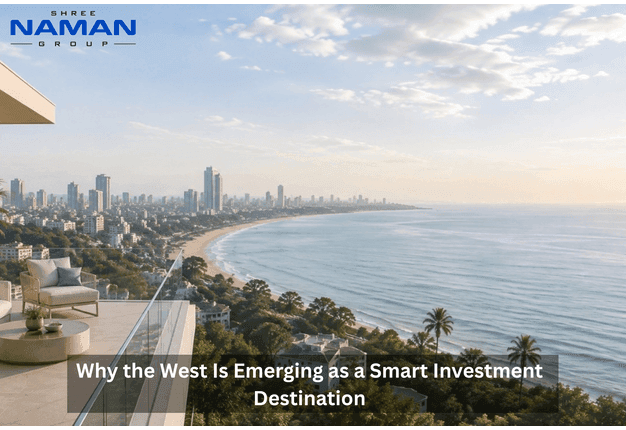
Why the West Is Emerging as a Smart Investment Destination
Ask any Mumbai property broker where the smart money is moving, and you'll hear the same answer more often than not: the western suburbs. Not South Mumbai's old-money addresses, not the eastern industrial belt trying to reinvent itself, the west. Andheri, Juhu, and the pockets in between have quietly become the part of the city where genuine, sustainable value creation is happening.
It's worth asking why. Because "location, location, location" is a cliché real estate agents love to repeat, but it doesn't actually explain what's driving buyers and investors toward this stretch of the city right now.
A Belt That Was Always Well-Connected — But Is Now Exceptionally So
The western suburbs have never suffered from poor connectivity. The Western Express Highway, the western line of the suburban railway, and proximity to the domestic and international airports have made this belt functional for decades. What's changed is the scale.
Metro corridors have cut across neighbourhoods that once relied purely on road and rail, shaving travel time in ways that matter to daily commuters and, by extension, to property values. When a locality moves from "40 minutes to BKC on a good day" to "20 minutes regardless of traffic," that's not a lifestyle upgrade; that's a fundamental repricing event for real estate in the area.
Take Andheri West. It sits almost equidistant from the airport, the Bandra-Worli corridor, and the SEEPZ-Powai IT stretch, and metro connectivity has only strengthened that positioning. For someone weighing where to buy, that kind of geographic leverage is hard to replicate elsewhere in the city.
Established Neighbourhoods Rarely Lose Their Shine
There's a pattern serious investors have picked up on over the years: newly developed micro-markets promise a lot on paper, but established ones deliver more consistently. Certain pockets of Andheri West are a textbook example. They're not localities that needed to be "discovered" they've been residential addresses of substance for decades, with mature social infrastructure, tree-lined internal roads, and a neighbourhood character that newer developments simply cannot manufacture overnight.
What makes areas like this attractive today isn't novelty. It's scarcity. Land in these established pockets is limited, redevelopment opportunities are selective, and every new residential project that comes up here does so within a locality that has already proven its staying power. Buyers looking at flats in Andheri West aren't betting on potential they're buying into a track record.
That distinction matters more than it sounds. A lot of Mumbai's real estate story over the last decade has been about locations that were "about to arrive." These pockets of Andheri West already have.
The Buyer Profile Has Shifted
A few years ago, west Mumbai's residential market was largely driven by end-users families upgrading homes, professionals moving closer to their workplaces. That's still true, but there's a second category of buyer that's grown considerably: the investor who treats a home purchase the way they'd treat any other asset allocation decision.
This buyer isn't chasing the flashiest tower or the loudest marketing campaign. They're looking at rental yield, tenant demand, resale liquidity, and how a locality is likely to perform over a ten-year horizon. And on most of those parameters, Andheri West checks boxes that many "upcoming" locations simply can't yet.
Rental demand here comes from a genuinely diverse pool corporate professionals working across the western suburbs and BKC, families who want school and hospital access without a long commute, and a steady stream of relocations tied to the area's proximity to the airport and business hubs. That diversity of demand is exactly what makes rental income more dependable, and it's a big reason 4 BHK flats for sale in Andheri West have found consistent takers among buyers who want larger homes without compromising on location.
Larger Homes Are Back in Demand
There's also a quieter shift happening in buyer preference. For years, Mumbai's compact 1 and 2 BHK formats dominated conversation, largely because of price sensitivity. That's changing, particularly among established families and professionals who've outgrown smaller homes and are willing to pay for space, provided the location justifies it.
This is where Andheri West's dual identity works in its favour it offers the energy and infrastructure of a well-developed urban node, but its quieter residential pockets retain enough calm and green cover to make larger homes genuinely liveable rather than just spacious on paper. A 4 BHK here isn't just square footage; it's proximity to work, access to good schools and hospitals, and a neighbourhood that doesn't feel like it's constantly under construction.
Why the Developer Behind the Project Matters as Much as the Location
Location sets the ceiling on value, but execution determines whether a project actually reaches it. This is where buyers do well to look closely at who's building. Naman Group Mumbai has spent over three decades working across the city's most demanding micro-markets Lower Parel, BKC, and the western suburbs among them and that kind of longevity in a cyclical industry like real estate isn't accidental. It comes from consistently delivering what was promised, on land parcels that require genuine planning expertise, particularly in redevelopment-heavy pockets like Andheri.
Being counted among the top builders in Mumbai isn't just a marketing line it reflects a track record of navigating approvals, construction quality, and long-term project delivery in a city where all three are notoriously difficult to get right simultaneously. For a buyer putting serious capital into a home, that track record is arguably as important as the address itself.
The Bigger Picture
Mumbai's real estate story is, at its core, a story about scarcity of land, of well-connected locations, and of neighbourhoods that offer both infrastructure and character. The western suburbs, and Andheri West in particular, sit at the intersection of all three. Add improving connectivity, a maturing buyer base that values fundamentals over hype, and developers with the experience to execute complex projects well, and it's not hard to see why this part of the city has moved from "worth considering" to "hard to ignore" for anyone serious about property investment in Mumbai.
For buyers evaluating where to put their money whether it's a home to live in or an asset to hold the west isn't just emerging. In many ways, it has already arrived.
Frequently Asked Questions
Why is west Mumbai considered a good investment destination right now?
West Mumbai combines strong existing infrastructure with new connectivity upgrades like metro corridors, which has made commute times to business hubs like BKC significantly shorter. This, along with limited land availability in established pockets, has made the region attractive to both end-users and long-term investors.
Is Andheri West a good area to buy a home for investment purposes?
Yes. Andheri West offers a rare mix of central location, strong social infrastructure, and consistent rental demand from a diverse tenant base of professionals, families, and relocations tied to the airport and nearby business districts. This makes it appealing for both rental income and long-term capital appreciation.
Why are larger homes like 4 BHK flats seeing renewed demand in Andheri West?
Buyers who have outgrown smaller homes are increasingly willing to pay for more space, provided the location still delivers on connectivity and lifestyle. Andheri West offers that balance, making 4 BHK flats for sale in Andheri West a practical choice for families and professionals seeking more room without moving away from the city's core.
Is now a good time to invest in west Mumbai real estate?
Given the combination of improving connectivity, limited land supply in established neighbourhoods, and a maturing pool of both end-users and investors, West Mumbai is well-positioned for continued demand. As with any real estate decision, buyers should evaluate specific localities and projects based on their own investment horizon and requirements.